- Inside Mongolia
- Posts
- 🤔 18.4% of Mongolia’s Workforce is in the Public Sector
🤔 18.4% of Mongolia’s Workforce is in the Public Sector
+158% in 10 years: Meat Prices are Soaring in Mongolia
Sponsored by

Good morning! Japan has the Shiba Inu, the UK has the Corgi, Germany has the German Shepherd, and Mongolia has the Bankhar. But how much do you really know about this ancient guardian breed? 🐾 Click HERE to explore more about Mongolia’s gentle giant. 🙆♀️
What’s inside today’s edition…
✈️ President’s Visit to Kazakhstan
🤔 18.4% of Mongolia’s Workforce is in the Public Sector
🚀 Meat Prices are Soaring
We’ve got a lot to cover, so let’s get moving. 🐐

MARKET
DBM: Fitch Ratings affirmed the Development Bank of Mongolia at B+/Stable, in line with the sovereign rating. The bank plans a 2026 bond issuance, with a 62.8% impaired loan ratio and 13.1% a capital ratio.
KZ: President U.Khurelsukh’s state visit to Kazakhstan begins today and will run through April 23, at the invitation of President Kassym-Jomart Tokayev.
NGL: The National Green Lab’s deadline for green project submissions closes today.

🤔 18.4% of Mongolia’s Workforce is in the Public Sector
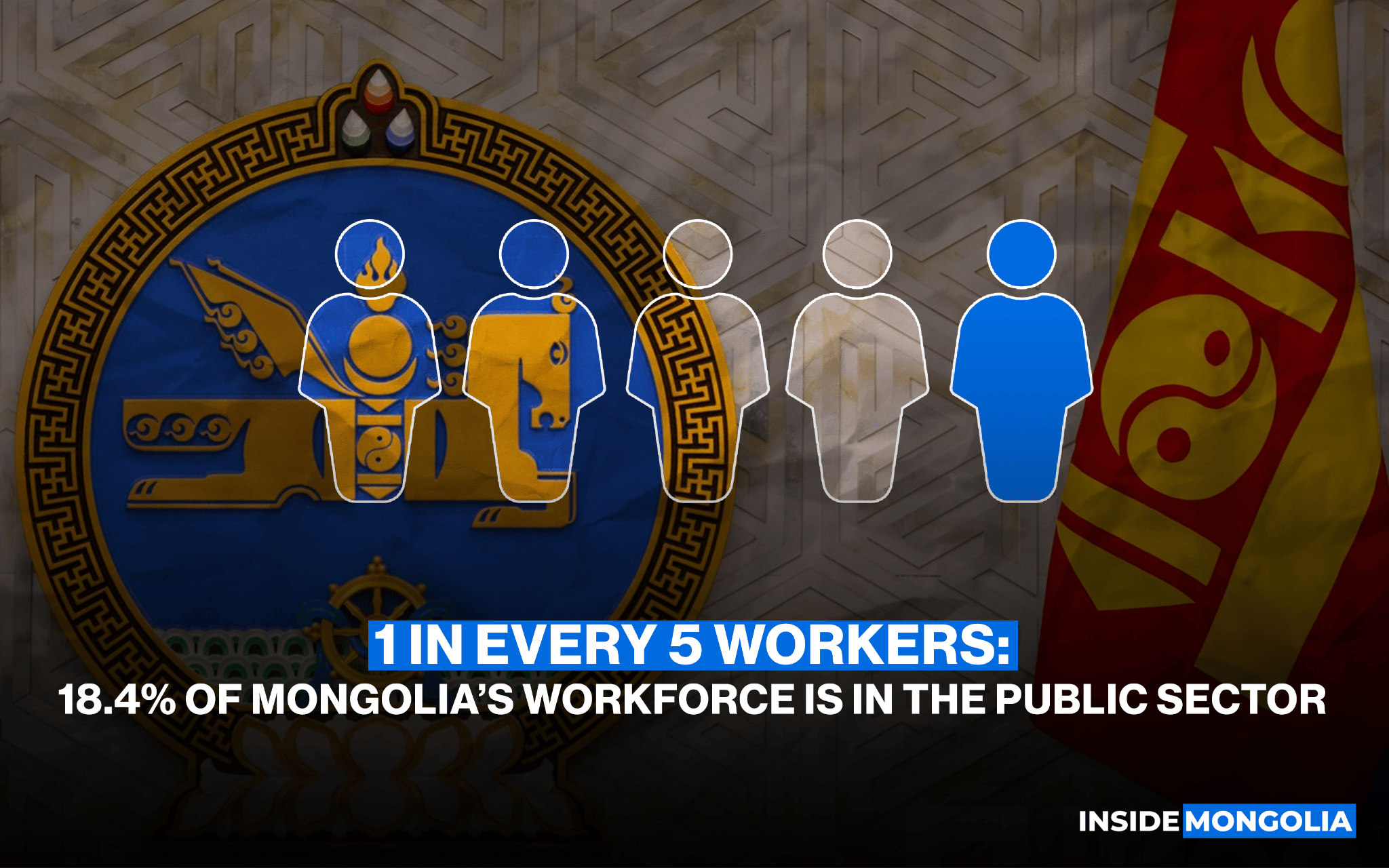
Mongolia has a population of around 3.5 million, of which 266,895 are civil servants, accounting for 6.4% of the total population. Within the labor force of 1.4 million, this translates to 18.4%, or roughly 1 in every 5 workers, employed in the public sector, making it one of the largest employers in the country.
👩💼 Workforce Snapshot
Mongolia’s civil service workforce is both young and well-educated. The average age stands at 39, with nearly 60% of employees in the prime working range of 25–45, while just 1.8% are over 60, suggesting a relatively limited pool of senior-level experience. At the same time, qualification levels remain strong, with more than 72% holding a bachelor’s degree or higher.
⚖️ Gender Dynamics
A clear gender imbalance is evident as women make up 64.3% of civil servants, dominating administrative and service roles, while men are more represented in political and specialized positions. As a result, many institutions fall short of the recommended 40:60 balance.
🔄 Experience Gap: The workforce is relatively new, with over 35% having less than 5 years of experience. While this reflects steady recruitment, it also raises concerns around institutional memory and long-term capacity.
📍 Geographic Concentration: Furthermore, more than half, or 52.7% of civil servants are based in Ulaanbaatar, highlighting a strong concentration in the capital.
🌍 Global Context
As you can see, Mongolia’s public sector is relatively large. While public employment averages around 11% worldwide and 18% in OECD countries, Mongolia’s 18% places it above the global norm and close to advanced economy levels. This reflects the state’s key role in service delivery, particularly in rural areas, but also raises questions around efficiency and sustainability.
Overall, the government is moving to streamline and improve the productivity of the civil service. The push is timely. Despite its size, the public sector is often criticized for slow, bureaucratic processes. There is also a broader structural concern. When the state employs such a large share of the workforce, it can crowd out the private sector, tightening the talent pool for businesses. In effect, the government risks becoming one of the largest competitors for labor in the market, raising important questions about balance, efficiency, and long-term growth.
⭐ Selected for you
ECONOMY & BUSINESS
MIAT Mongolian Airlines Adopts RateGain’s AI Platform to Boost Pricing Agility. (ePlaneAI)
Mongolia Targets Fiscal Overhaul with EU Support to Bolster Financial Systems. (TheBrusselTimes)
Making Money on the Mongolian Mania. (StockInvestors)
Mongolia’s Calving Reaches 4.2 Million. (GoGo)
The Government of Japan Extends Funding Support to WHO Mongolia to Strengthen Local Health Systems for Disease Outbreak Preparedness and Response. (WHO)
Jeju Island Seeks to Diversify Tourism Markets by targeting Mongolia, Latin America. (KoreaJoongAngDaily)
POLITICS
MOH and WHO Conclude Pilot on HPV Testing for Cervical Cancer Screening in Mongolia. (WHO)
Ulaanbaatar Partners with UNDP to Pilot Solar-Powered EV Charging Stations. (UNDP)
U. Khurelsukh Becomes the First Mongolian President to Visit All Central Asian Countries During His Tenure. (InsideMongolia)
Capital Shifts Civil Servants to 4-Day Workweek. (InsideMongolia)
New Mongolian Ambassador Begins Mission in Kazakhstan. (Kazinform)
CULTURE & LIFESTYLE
Chinggis Khaan Statue Complex: Mongolia's Giant Monument Guide. (AdHocNews)
The Silent Demise: Mongolia’s Fight to Save the Steppe. (Earth)
Discovery Debunks Long-Held Beliefs About Mongolian Burial Rituals. (Earth.com)
This 86-Million-Year-Old Mongolian Dinosaur was the Most Feared Predator of Its Time. (FuturaScience)
🚀 +158% in 10 years: Meat Prices are Soaring in Mongolia
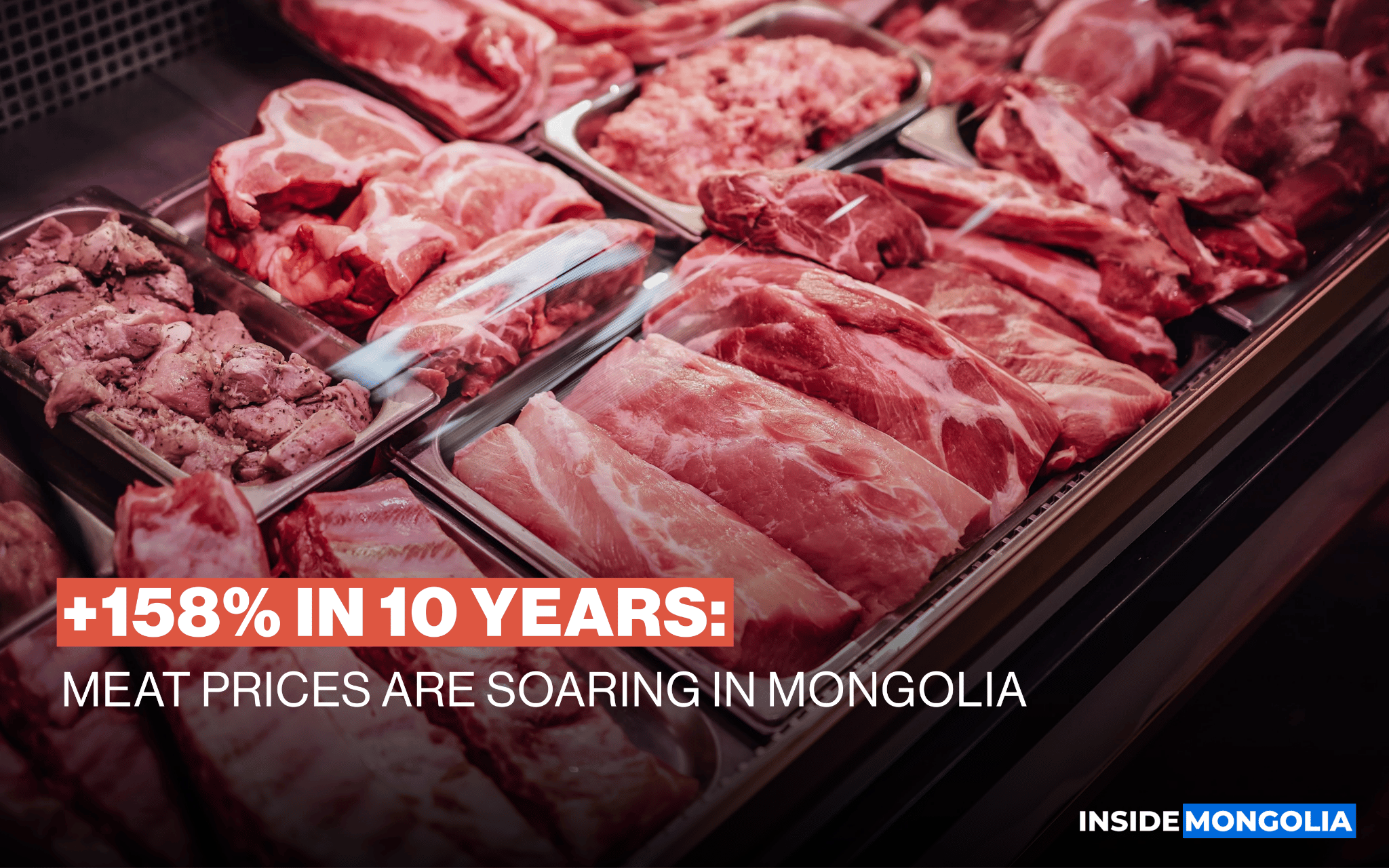
Despite having 58.1 million livestock, Mongolia continues to see rising meat prices. How much have they increased, and what’s driving the surge?
🥴 A Decade Ago: The “Good Old Days”
Around this time in 2015, boneless beef was priced at about ₮10,300 per kg. Today, it has surpassed ₮30,000. Bone-in beef used to cost around ₮8,500, while horse meat was under ₮6,000. Over the past 10 years, meat prices across all types have risen by an average of 158%.
❤️🩹 The “Golden Period” of Deflation: Taking 2015 as a base year, meat prices reached historic lows between late 2015 and early 2018. Specifically, from December 2015 to the end of 2016, mutton and goat meat prices dropped by 40%–46% compared to 2015 levels.
🥵 The Turning Point: From 2019 onward, prices stopped declining and began to rise sharply. By mid-2021, horse meat prices had doubled for the first time. Meanwhile, prices of mutton and beef, the most consumed meats in Mongolia, have seen the steepest, almost vertical increases over the past 2 years.
🥊 Import Dynamics and Price Gap
Interestingly, while domestic meat prices have continued to climb, imported chicken prices have remained relatively stable, even declining from their 2022 peak. This highlights how domestic meat prices are more exposed to fluctuations driven by logistics, processing, and other cost pressures.
🔑 Where Does the Money Go?
Even though livestock per capita remains extremely high, rising meat prices are not translating into higher income for herders. Instead, costs such as transportation, fuel, storage, and multiple layers of intermediaries are driving prices up. As a result, herders feel underpaid, while consumers feel overcharged, creating a system where both sides lose.
Lastly… Even Mongolians themselves are wondering, despite having more livestock than ever before, why are meat prices still skyrocketing? It all comes down to the urgent need to develop modern logistics, cold storage infrastructure, and digital platforms that can properly connect herders with consumers. Unless Mongolia acts on this, its people will remain like beggars sitting on a mountain of gold.
World Record Strength. Eight Government Contracts. Limited Shares.

A Guinness World Record sounds like a novelty, but it served as clear validation of the strength and real-world capability of RISE Robotics's technology.
Their Beltdraulic™ system set the record for the strongest robotic arm prototype ever built, demonstrating performance that is relevant across many sectors.
The arm is key to modernizing Munition Handling Units used by the Air Force, which recently awarded RISE a $3M contract. This is RISE’s 8th contract - a result of delivering successfully on past awards.
The company has raised over $27M and just opened up a limited allocation of shares to retail investors.

Partnership Inquiries:
Place an ad
Publisher: Ts.Ankhbayar
Writer: M.Khulan
Graphics by: Ts.Tselmeg
Disclaimer: The information Inside Mongolia provides is for educational and informational purposes only. It is not intended to be or constitute financial advice, trading advice, or any other advice. The decision whether to consider the information we provide is solely our readers' independent decision.